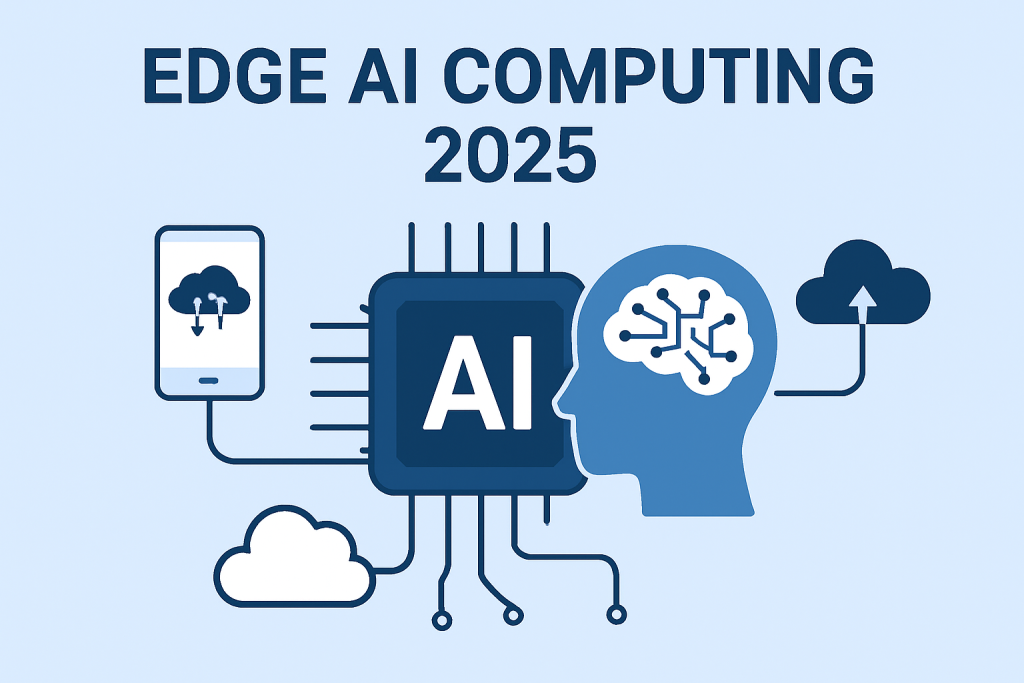
In 2025, edge AI computing is set to reshape how we use intelligent devices. Unlike traditional cloud-based AI, edge AI means running AI models directly on devices, such as smartphones, IoT sensors, or edge servers. This shift brings big advantages: lower latency, better privacy, and real-time intelligence — all without needing a constant internet connection.
What Is Edge AI Computing?
Edge AI computing refers to deploying artificial intelligence models on hardware located at the “edge” of the network — meaning the device itself, or very close to it, instead of sending all data to a central cloud. These devices use neural processing units (NPUs) or specialized chips designed to run AI inference locally.
By keeping AI close to the data source, edge AI helps in real-time decision-making and reduces the need for expensive and power-hungry data transfers to cloud servers.
Why Edge AI Is Trending in 2025
- Exploding IoT Growth
The number of IoT devices is rising rapidly. With so many connected devices generating data, it’s inefficient and slow to send everything to the cloud. Edge AI solves this by processing data on-site. - 5G & Low Latency
As 5G networks expand, devices can communicate faster. But for ultra-fast responsiveness — like in health devices, smart factories, or AR — on-device AI is ideal. - Privacy & Security
Keeping sensitive data on the device (like personal health signals) instead of exporting it to the cloud improves user privacy. Edge AI helps companies comply with stricter data rules. - Advanced Hardware
Modern devices now come packed with powerful NPUs and AI accelerators, enabling complex models to run locally. - Hybrid Cloud Architectures
Many companies are adopting edge + cloud systems. Large-scale training happens in the cloud, but real-time inference runs at the edge.
Key Applications of Edge AI in 2025
- Smart Healthcare: Wearable devices or edge health sensors can monitor vitals, detect anomalies, and alert users or doctors immediately — all in real-time.
- Industrial Automation: Factories can use edge AI for predictive maintenance, quality control, and anomaly detection, minimizing downtime.
- Smart Cities: Edge AI powers traffic cameras, pollution sensors, and public infrastructure to make fast, local decisions.
- Autonomous Vehicles & Robotics: Vehicles and robots need to make split-second decisions. By using on-device AI, they reduce their reliance on constant cloud communication.
- Augmented Reality / Gaming: AR apps can run more smoothly when AI models are on-device, reducing lag and enhancing user experience.
Challenges to Consider
- Power Consumption: Running AI on devices uses energy. Designing efficient NPUs and optimizing models is critical.
- Hardware Costs: Embedding NPUs in low-cost devices is still a challenge.
- Model Size vs Accuracy: Smaller models are easier to run on devices, but they may not be as accurate as large ones.
- Security Risks: Even though data stays local, devices can still be attacked. Secure firmware and hardware are essential.
- Development Complexity: Building and optimizing AI for different edge devices (phones, sensors, robots) is technically challenging.
What the Future Might Look Like
- More compact, efficient AI chips for edge devices.
- Smarter sensors that automatically adapt their behavior based on real-time data.
- A rise in serverless edge computing, where you don’t need to manage infrastructure — AI just runs wherever it is needed. (arXiv)
- Personal devices (like AR glasses or smart wearables) with powerful local AI for on-the-spot processing.
- A shift in app and product design: developers will lean into edge-first architectures.
Tips for Tech Bloggers / Content Creators
- Write about edge AI use cases that people care about (health, smart home, AR).
- Include real-world examples and emerging products.
- Use visuals: diagrams showing edge vs cloud, how data flows.
- Interview or cite experts: link to research on on-device AI.
- Keep up with hardware news: NPUs, AI accelerators, 5G + edge devices.
Related post

I am Narayan Pandeya, a technology news writer covering the latest updates in smartphones, apps, artificial intelligence, software releases, and gaming gadgets. I focus on researching reliable sources and presenting accurate, easy-to-understand tech news for a global audience. My goal is to explain new technologies in simple language and help readers stay informed about digital trends, products, and innovations shaping today’s tech world.